
Course DetailsHome / Courses Details
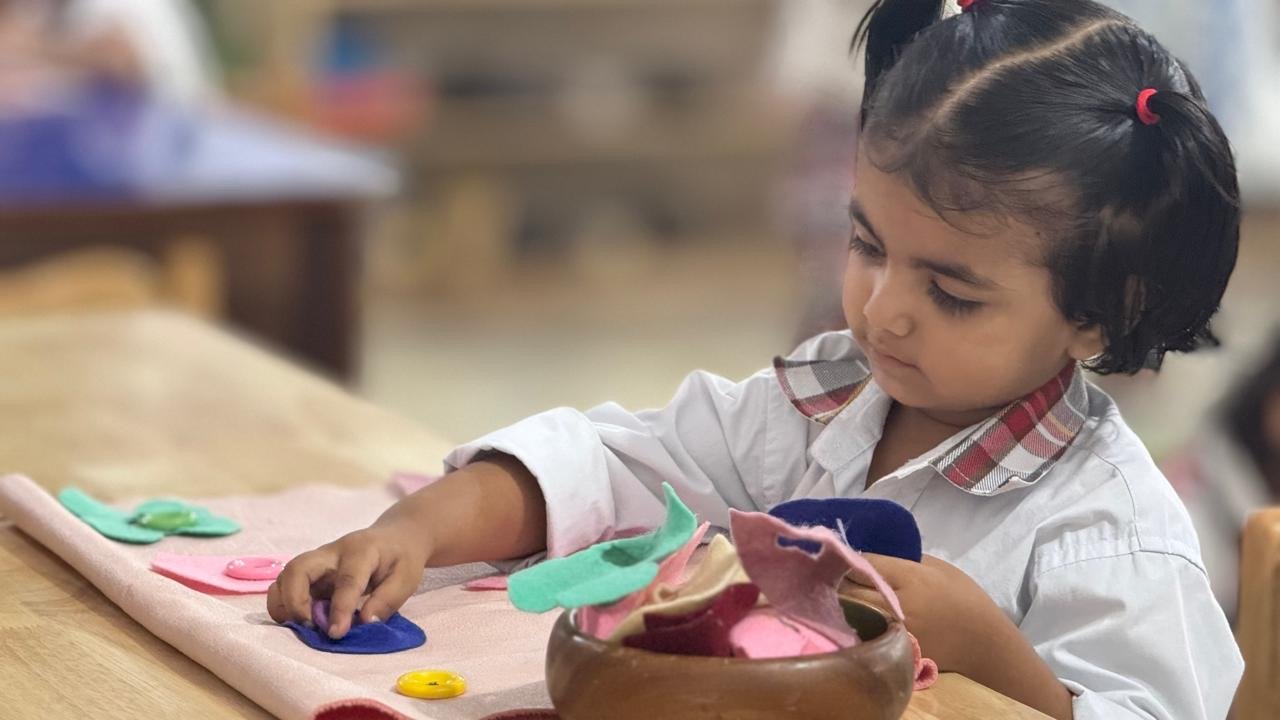
Learning through touch, sight, sound and exploration.
Sensorial Learning is an essential part of Montessori education that helps children understand the world through their five senses: sight, hearing, touch, taste, and smell. During early childhood, children naturally explore their surroundings, observe differences, and discover new experiences. Montessori Sensorial activities make this natural curiosity an organised and meaningful learning experience.
At Faith Montessori School, we provide specially designed Montessori materials that encourage children to explore, compare, classify, and understand different qualities of objects. Through hands-on activities, children discover variations in colour, shape, size, texture, weight, sound, and dimensions. These experiences help them develop awareness, observation, concentration, and the ability to recognise patterns.
Activities such as colour matching, shape identification, sound recognition, texture exploration, and arranging objects according to size allow children to learn through direct experience. Rather than simply memorising information, children develop a deeper understanding by interacting with learning materials.
Sensorial education also prepares children for future academic learning. Recognising shapes and patterns supports mathematical understanding, while distinguishing sounds helps develop listening and language skills. Comparing objects and identifying differences strengthens logical thinking and problem-solving abilities.
Our Montessori educators introduce materials through demonstrations and encourage children to explore independently. Each activity is designed to support children's developmental readiness and individual learning pace.
Through Sensorial Learning, children become more observant, curious, focused, and confident. They develop the ability to understand their surroundings and build a strong foundation for future learning and intellectual development.
Sensorial learning helps children understand and organise the world around them through their five senses. In Montessori education, children use specially designed materials to explore differences in size, shape, colour, texture, sound, weight, and dimensions.
At Faith Montessori School, we believe that children learn best when they can experience things directly. Sensorial activities allow children to observe, compare, classify, and discover patterns through hands-on exploration. These experiences strengthen their ability to notice details, develop concentration, and build the foundations for more advanced learning.
Our learning environment encourages curiosity and independent discovery. Children are given opportunities to experiment with materials, identify similarities and differences, and develop an understanding of their surroundings.
Our Sensorial curriculum includes:
-
Colour recognition and colour grading.
-
Shape identification and geometric exploration.
-
Texture, weight, and temperature activities.
-
Sound discrimination and listening exercises.
-
Size, length, height, and dimension comparison.
-
Smell and taste exploration.
-
Classification, matching, and sequencing activities.
-
Development of observation and concentration skills.
Our Montessori educators introduce sensorial materials through demonstrations and guided exploration. They observe each child's progress and provide suitable activities that encourage independent learning and discovery.
Parent Feedback
Parents can share how their children have developed better observation skills, curiosity, sensory awareness, concentration, and confidence through everyday exploration.